
Is living near UCL or LSE actually worth it? (May 2026 data)
Is paying Zone 1 rent near UCL or LSE actually worth it? We compared London rent prices, commute times, and safety data across six student areas in May 2026.
Every year before the September intake, international students and parents ask the same question: is it actually worth paying Zone 1 rent to live near campus? This article looks at what the data currently shows, rent, commute times, and safety figures across six London areas, so you can make the decision with current information rather than assumptions or outdated advice.
The assumption worth questioning
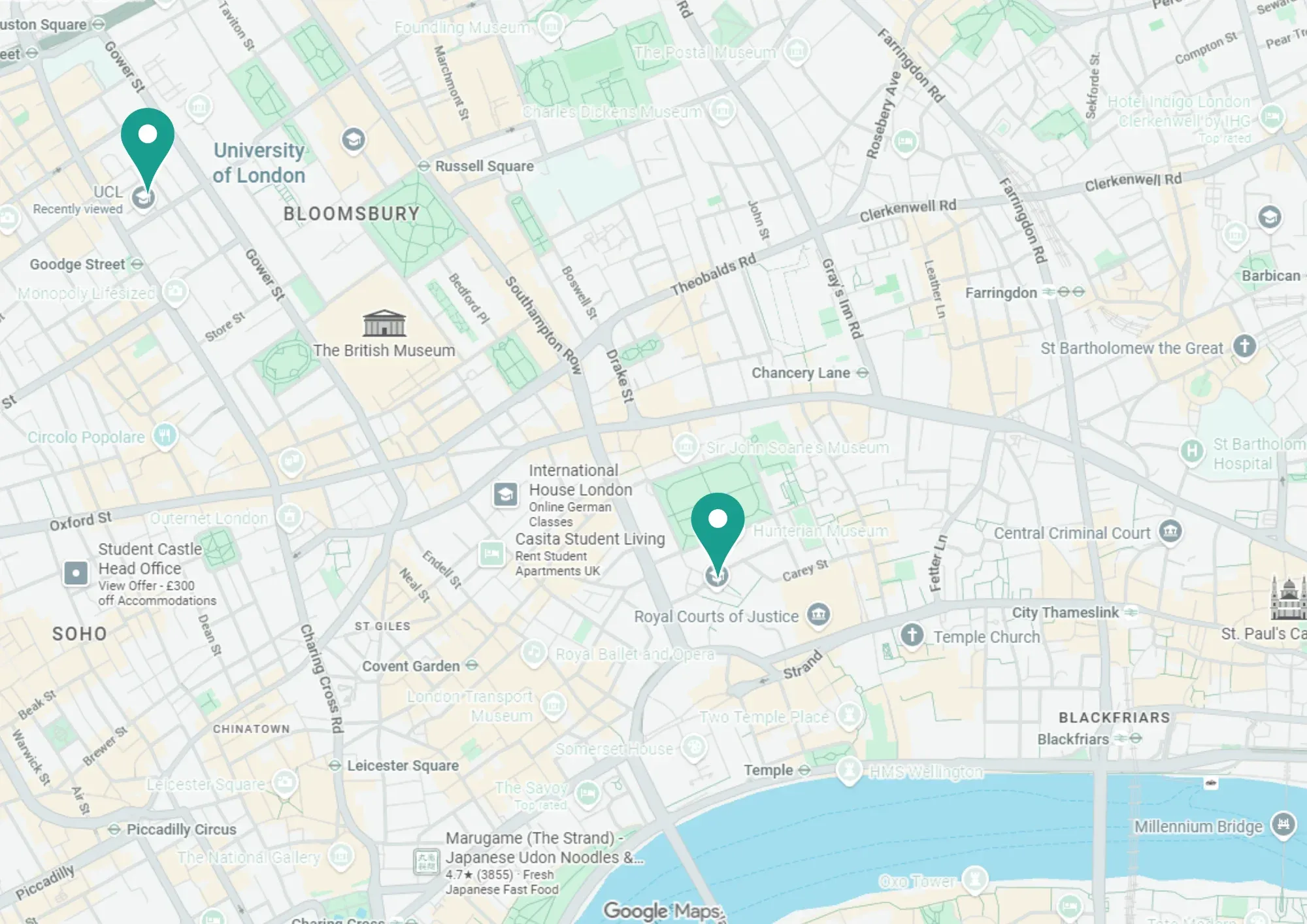
Filtering by WC1 or WC2 on SpareRoom is the default move. UCL is in Bloomsbury, LSE is in Holborn, so living nearby feels logical. The issue is that “nearby” in London carries a substantial price premium, and most students only realise the trade-off after signing a contract. London renting usually comes down to three variables: location, price, and quality. Most students end up sacrificing one of them, often without fully realising it until after they move.
What it costs to live near campus right now
Based on active SpareRoom listings from May 2026:
Supply in both postcodes is limited. Much of the market is aimed at professionals, short-term renters, or build-to-rent developments rather than standard student flat-shares. Competition for well-priced listings remains high.
There is also a cost rarely included in housing budgets: day-to-day living expenses in Zone 1. Supermarkets, cafés, and restaurants around both campuses carry a noticeable premium compared with similar areas in Zones 2 and 3. Over an academic year, that difference adds up.
What “living near campus” actually means
You do not live inside your university building. You live in a flat, at some distance from campus, which usually involves a walk to a station or a walk directly to your lectures each morning.
In WC1, the walk from a typical flat to UCL’s main entrance can easily take 10–20 minutes depending on the exact location. In WC2, LSE students face similar conditions — the postcode covers a broad commercial area rather than a compact residential cluster around one entrance.
The relevant figure is not how close your postcode appears on a map. It is how long it takes to get from your front door to your first lecture. That door-to-door figure is what your mornings will actually feel like.
One factor many students underestimate: proximity to a Tube station matters just as much as proximity to campus. A flat in Zone 2 ten minutes from a station may involve a longer real commute than a flat in Zone 3 located two minutes from a fast line.
The strongest value case: Walthamstow (E17)
The trade-off is commute length to LSE. For UCL students, however, the numbers make a compelling case.
The strongest commute advantage: Brixton (SW9)
For LSE students specifically, Brixton stood out for one reason: commute efficiency.
Approximate journey cost: £1.75.
Compared with Zone 1 rents, the cost difference is substantial.
This does not automatically make Brixton a bad choice. Many students live there without issue and value the transport connections, energy, and relative affordability of the area. But it is one of the clearest examples in this research of how “best commute” and “best fit” are not always the same thing.
The full report explores the crime context, safety scoring, and comparative data in more detail.
The biggest trade-off: living near campus itself
The data does not suggest that living near campus is irrational. For some students, especially those with intensive schedules or mobility considerations, it may absolutely be worth the premium.
What the data does suggest is that many students pay Zone 1 prices without fully understanding how much additional convenience they are actually gaining.
That does not make the decision wrong. But it does make it worth examining carefully before filtering exclusively by WC1 or WC2.
So, is living near UCL or LSE worth it?
For some students, yes.
For others, paying an additional £500–£900 per month mainly buys reassurance: the feeling of being “close to campus”, even if the real difference in daily travel time is smaller than expected.
commute tolerance,
course intensity,
and personal comfort with different areas of London.
The important thing is making the trade-off consciously rather than inheriting assumptions about what student life in London is supposed to look like.
Looking at areas beyond WC1 and WC2?
This article covers only part of the picture. The full London Student Housing Report - May 2026 explores additional London areas, real commute patterns, rent differences, safety considerations, and the trade-offs students often discover too late.
Access the full reportQuestions students often ask
Is it cheaper to live outside Zone 1 in London?
Yes!, significantly. Based on May 2026 listings, comparable rooms in Zones 2 and 3 were often hundreds of pounds cheaper per month than equivalent rooms near UCL or LSE.
What area offered the best value in your comparison?
Walthamstow presented the strongest overall balance between affordability, commute practicality, and safety indicators in the areas analysed.
Is Brixton a good option for LSE students?
For commute efficiency, yes. The direct bus connection to the Strand was one of the fastest and cheapest routes in the comparison. The trade-off is a materially higher crime profile than areas such as Walthamstow, which some students, particularly women travelling later at night, may weigh heavily in their decision.
Is living near campus always worth the premium?
Not always. In several cases, students paying substantially higher Zone 1 rents reduced their real door-to-door commute by less time than expected.
What matters more: postcode or transport connection?
In London, transport connection often matters more. A property near a fast Tube line can outperform a theoretically “closer” postcode with weaker access.